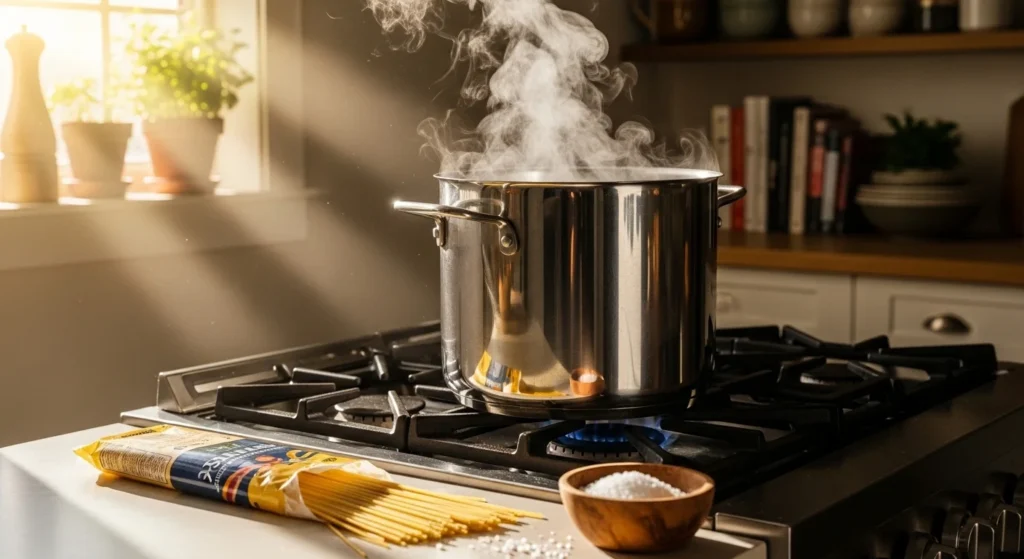
There’s something magical about a bowl of perfectly cooked pasta — tender but firm, glossy with sauce, and packed with flavor in every bite. Yet somehow, pasta can go wrong fast. Mushy noodles. Sticky clumps. Bland taste. Sauce sliding off like it never belonged.
Good news: perfect pasta isn’t luck — it’s technique. Once you know a few chef-approved tricks, you’ll nail it every single time.
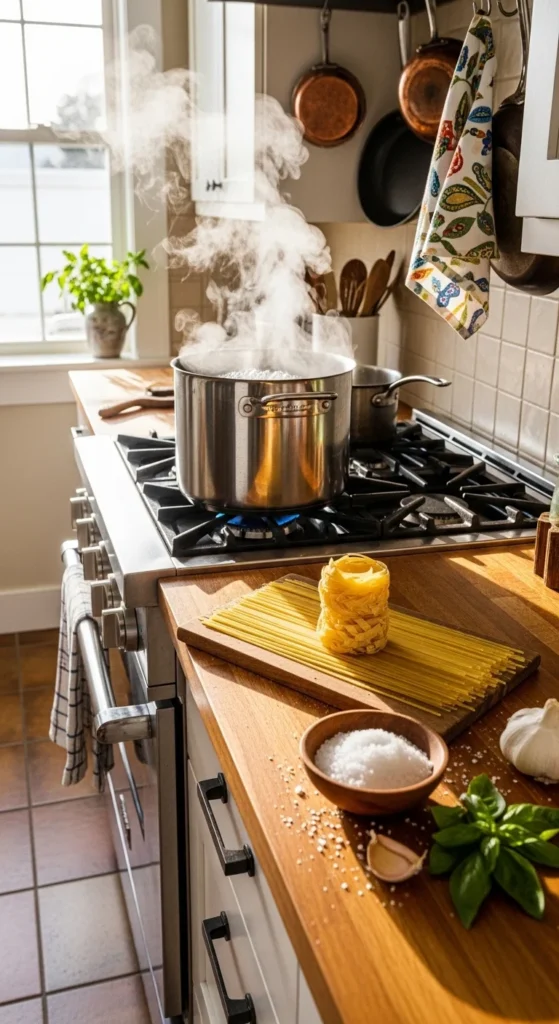
Let’s walk through it step-by-step — simple, foolproof, and totally beginner-friendly.
Step 1: Start with the Right Pot and Water Ratio
Most people use too little water. That’s the #1 cause of sticky, gummy pasta.
Pasta needs room to move so the starch can disperse.
Golden rule:
- 4–6 quarts water per 1 lb (450g) pasta
- Big, high-walled pot for long shapes like spaghetti
More water = less sticking + better texture.
Bring it to a full rolling boil, not gentle bubbles.
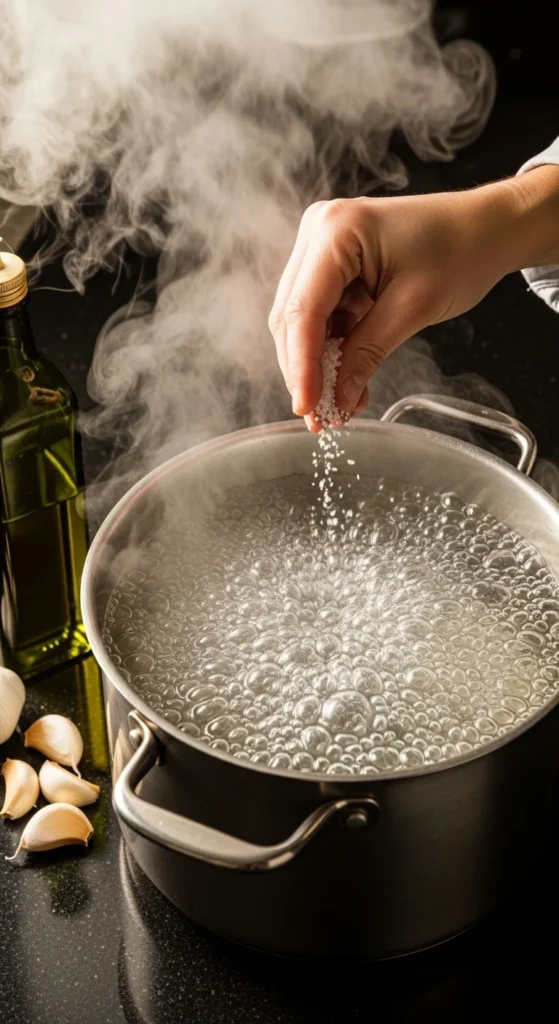
Step 2: Salt Like You Mean It
If your pasta tastes bland, this is why.
Pasta absorbs water as it cooks — so this is your only chance to season it from the inside.
Don’t be shy.
Add:
- 1–2 tablespoons salt per pound of pasta
The water should taste slightly salty like the sea.
👉 Skip the oil. Oil floats on top and doesn’t prevent sticking — plus it stops sauce from clinging later.
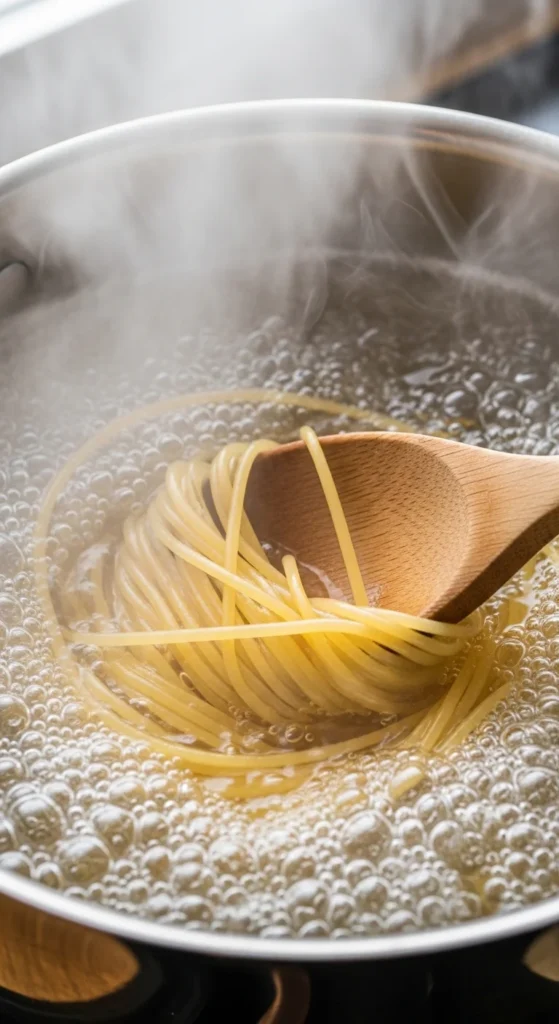
Step 3: Add Pasta + Stir Immediately
Once the water is boiling hard:
- Drop pasta in
- Stir right away
- Stir again during the first 2 minutes
This prevents clumping while the starch releases.
After that, an occasional stir is enough.
Step 4: Cook to Al Dente (Not Soft!)
Here’s where most people overcook.
Ignore the package time — it’s just a guideline.
Start testing 1–2 minutes early.
What is al dente?
It means “to the tooth.”
You want:
- Tender outside
- Slight firm bite in the center
- Not crunchy
- Not mushy
Do a quick taste test. Trust your mouth, not the timer.
Pro tip: Pasta keeps cooking slightly after draining, so stop just before it feels perfect.
Step 5: Save Your Pasta Water (Game-Changer)
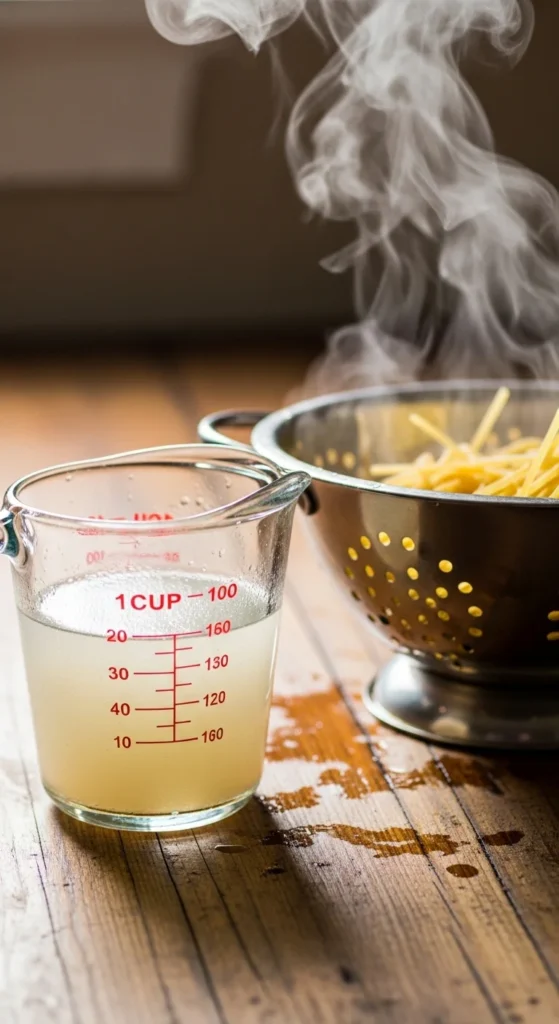
Before draining, scoop out:
- 1 cup starchy pasta water
This cloudy water is liquid gold.
Why?
Because the starch helps:
- Thicken sauces
- Make them silky
- Help sauce cling to noodles
Restaurants use this trick constantly.
Step 6: Never Rinse (Seriously, Don’t)
Rinsing washes away:
- Flavor
- Salt
- Starch (which helps sauce stick)
The only time to rinse is for cold pasta salads.
For hot pasta dishes? Drain and go straight to the sauce.
Step 7: Finish Cooking in the Sauce (Italian Secret)
This step takes your pasta from good → restaurant-quality.
Instead of dumping sauce on top, do this:
- Transfer drained pasta into the sauce pan
- Add a splash of pasta water
- Toss for 1–2 minutes over heat
This helps:
- Pasta absorb flavor
- Sauce thicken naturally
- Everything emulsify beautifully
It creates that glossy, clingy finish you see in Italian restaurants.

Bonus Pro Tips You’ll Love
For creamier pasta
Try a cold-start method:
- Add pasta + water together
- Cook as it heats
- More starch release = silkier sauce
For energy savings
Try passive cooking:
- Boil 3–4 minutes
- Turn off heat
- Cover and let sit until tender
For precision geeks
Sous vide at 85–90°C gives perfectly even al dente texture (next-level stuff).
For gluten-free pasta
- Stir less
- Use extra water
- Test early (it breaks easily)
The Perfect Pasta Checklist
Before you cook, remember:
✔ Big pot
✔ Lots of water
✔ Heavy salt
✔ Stir first 2 minutes
✔ Cook al dente
✔ Save pasta water
✔ Finish in sauce
✔ Never rinse
Follow this once and you’ll never go back.
Final Bite
Perfect pasta isn’t complicated — it’s just small smart moves that make a huge difference. Once you taste that glossy, sauce-coated, al dente bite, you’ll wonder how you ever cooked it any other way.
Save this guide, pin it for later, and the next time pasta night hits… you’ll cook like a pro. 🍝