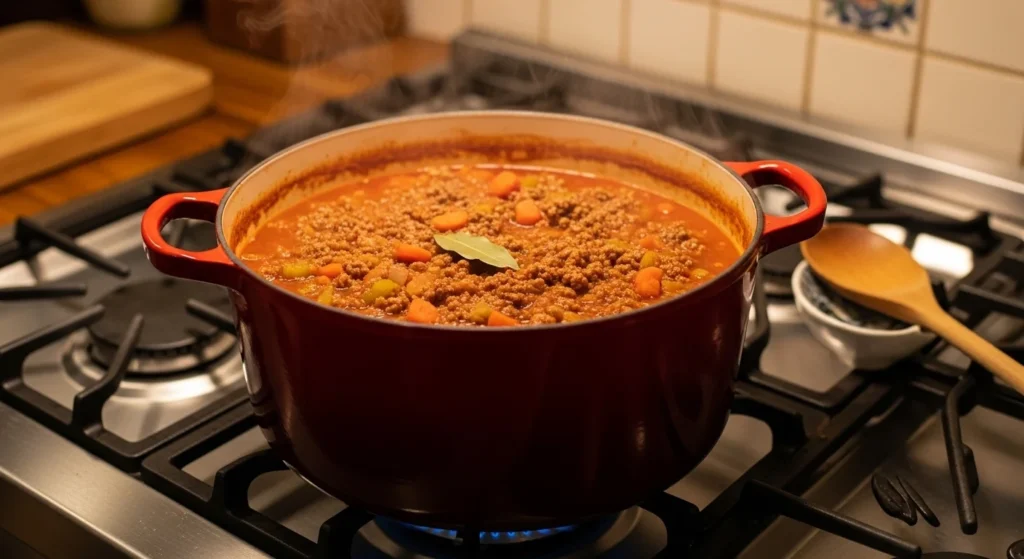
If marinara is the quick weeknight hero, Bolognese is the slow-cooked masterpiece. This iconic Italian ragù is all about patience — layers of finely chopped vegetables, rich meats, wine, and milk simmer together for hours until the sauce becomes deeply savory and velvety.
The reward? A pasta night that tastes straight out of Bologna.
What Makes Authentic Bolognese Different
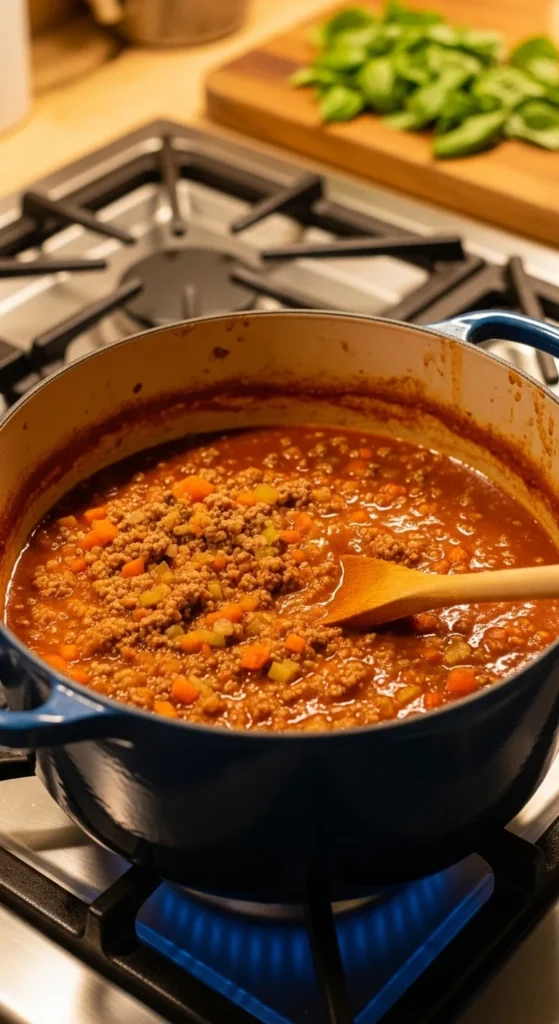
True Ragù alla Bolognese isn’t just “meat sauce.” It follows a very specific philosophy:
- Built on a soffritto (onion, carrot, celery)
- Uses beef + pork for richness
- Includes pancetta fat
- Very light on tomato
- Finished with whole milk
- Simmered low and slow (3–5 hours)
- Traditionally no garlic
The goal is a sauce that’s meaty, silky, and deeply layered, not tomato-heavy.
Ingredients You’ll Need
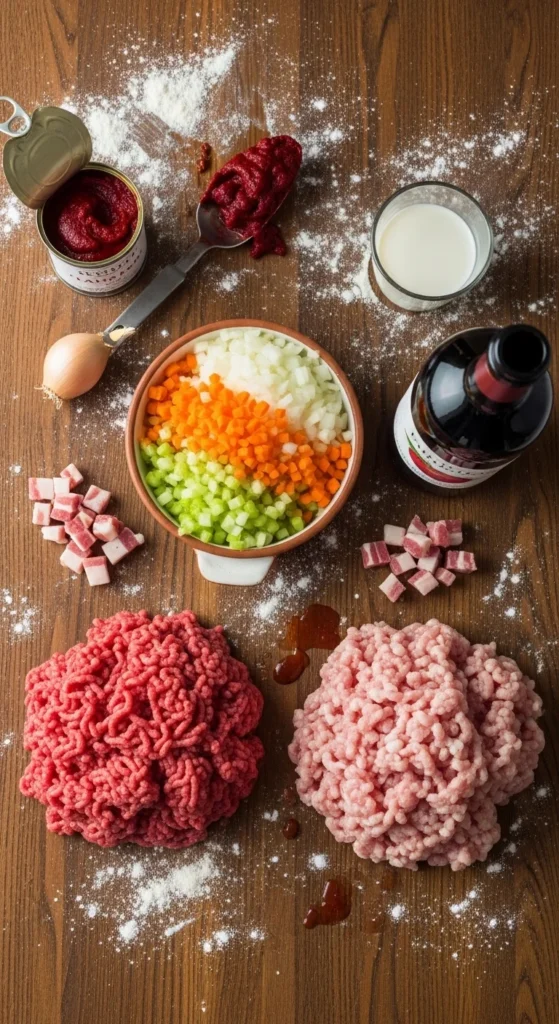
Here’s the classic lineup for a rich, balanced Bolognese.
Core ingredients
- 2 tablespoons olive oil
- 3 oz pancetta, finely chopped
- 1 small onion, finely diced
- 1 small carrot, finely diced
- 1 celery stalk, finely diced
- 300 g ground beef
- 300 g ground pork
- 2 tablespoons tomato paste
- 1 cup dry white wine (or red)
- 1 cup whole milk
- 1–2 cups beef or vegetable stock
- Salt and black pepper
- Pinch nutmeg (optional but traditional)
- 1 bay leaf (optional)
Best pasta pairings
- Tagliatelle
- Pappardelle
- Fettuccine
- Lasagna sheets
Step 1: Build the Soffritto Base
This is the flavor foundation — don’t rush it.
How to do it:
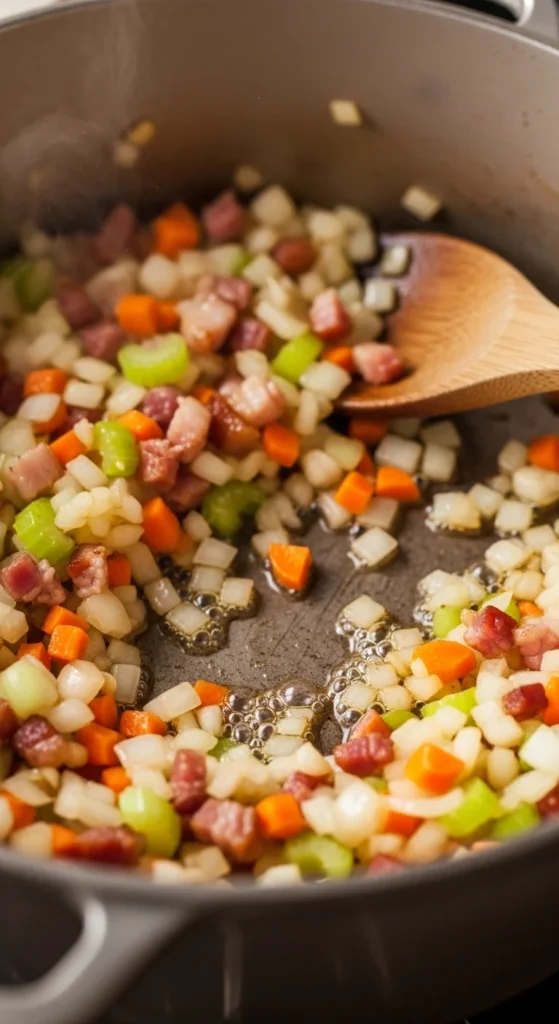
- Heat olive oil in a heavy pot over low heat.
- Add pancetta and cook slowly until the fat renders.
- Stir in onion, carrot, and celery.
- Cook gently for 8–12 minutes until very soft (not browned).
Pro tips
- Everything should be finely chopped
- Keep heat low — you’re sweating, not frying
- Food processor works great for speed
This slow melt of vegetables creates the signature Bolognese depth.
Step 2: Brown the Meat Properly
Now we build the hearty body of the sauce.
Add:
- Ground beef
- Ground pork
Cook over medium heat, breaking the meat into very small pieces.
What you’re looking for
- Light browning
- No large chunks
- Moist but not watery
⚠️ Avoid boiling the meat — excess liquid should cook off.
Why the dual-meat blend matters
- Beef = structure and depth
- Pork = fat and tenderness
- Pancetta = umami boost
This trio is the secret to restaurant-quality ragù.
Step 3: Caramelize the Tomato Paste
This step is often skipped — and it makes a huge difference.
Push meat to the side, then:
- Add tomato paste to the center
- Cook it for 1–2 minutes until slightly darkened
- Stir everything together
Why this matters
Caramelizing tomato paste:
- Removes raw acidity
- Adds richness
- Deepens color
- Builds umami
Authentic Bolognese uses far less tomato than most American versions.
Step 4: Deglaze with Wine
Time to lift all that flavor from the pan.
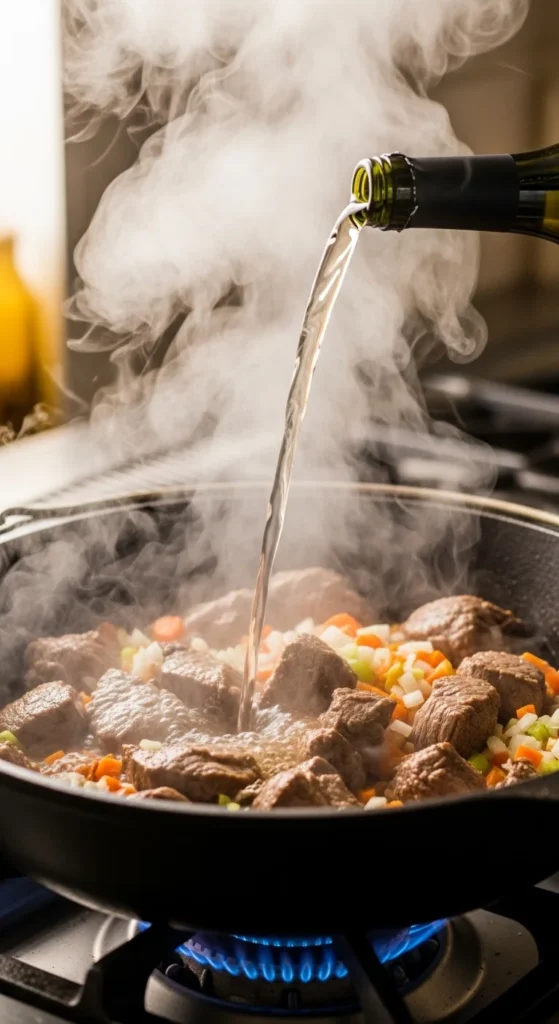
Pour in the wine and:
- Scrape the bottom
- Simmer until mostly evaporated
- Let the alcohol cook off
White vs. red wine
- White wine (traditional): lighter, cleaner
- Red wine: deeper, slightly bolder
Both work — purists lean white.
Step 5: Add Milk for Signature Creaminess
This is the step many people don’t expect.
Pour in whole milk and simmer gently until mostly absorbed.
Why milk is essential
- Tenderizes the meat
- Softens acidity
- Creates silky texture
- Adds subtle sweetness
You’ll notice the sauce becoming smoother and more cohesive.
Optional: add a tiny pinch of nutmeg here for classic warmth.
Step 6: Slow Simmer to Perfection
Now the magic happens.
Add:
- 1 cup stock
- Bay leaf (optional)
- Salt and pepper
Bring to the barest simmer, then cook uncovered or partially covered for 3–5 hours.
The low-and-slow rules
- Gentle bubbles only
- Stir every 30 minutes
- Add splashes of stock if drying out
- Never let it boil
Visual doneness cue
Finished Bolognese should look:
- Thick like soft oatmeal
- Rich and glossy
- Deep reddish-brown
- Not watery
Patience here is what separates good from unforgettable.
Step 7: Finish and Serve
Remove the bay leaf and taste for seasoning.
To serve properly:
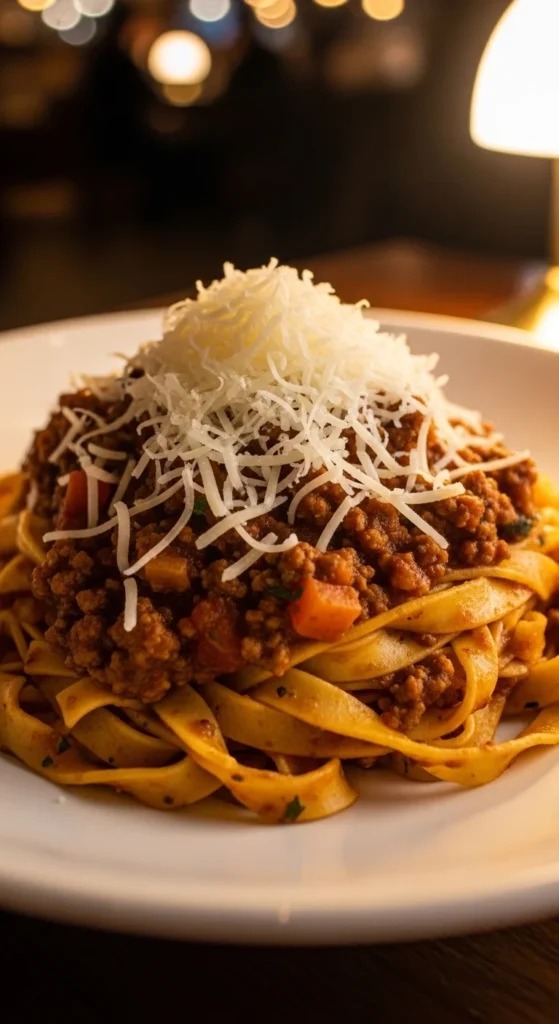
- Toss sauce with hot wide pasta
- Add splash of pasta water if needed
- Finish with Parmigiano-Reggiano
Storage and Make-Ahead Tips
Bolognese actually improves with time.
Refrigerator
- Keeps 4 days
- Flavor deepens overnight
Freezer
- Freeze up to 3 months
- Portion in meal-size containers
Bonus use
- Perfect lasagna filling
- Stuffed shells
- Polenta topping
Common Bolognese Mistakes to Avoid
❌ Cooking too fast
❌ Using too much tomato
❌ Skipping the milk
❌ Not chopping soffritto finely
❌ Letting the sauce boil
Remember: gentle heat + time = authentic texture.
Final Thoughts
Rich Bolognese isn’t difficult — it just asks for patience. When you respect the slow simmer, balance the meats, and finish with milk, you get a sauce that’s deeply comforting and unmistakably Italian.
Make a big batch this weekend, freeze the extra, and your future pasta nights will thank you.
Save this recipe for later and enjoy your ultimate homemade ragù! 🍝✨