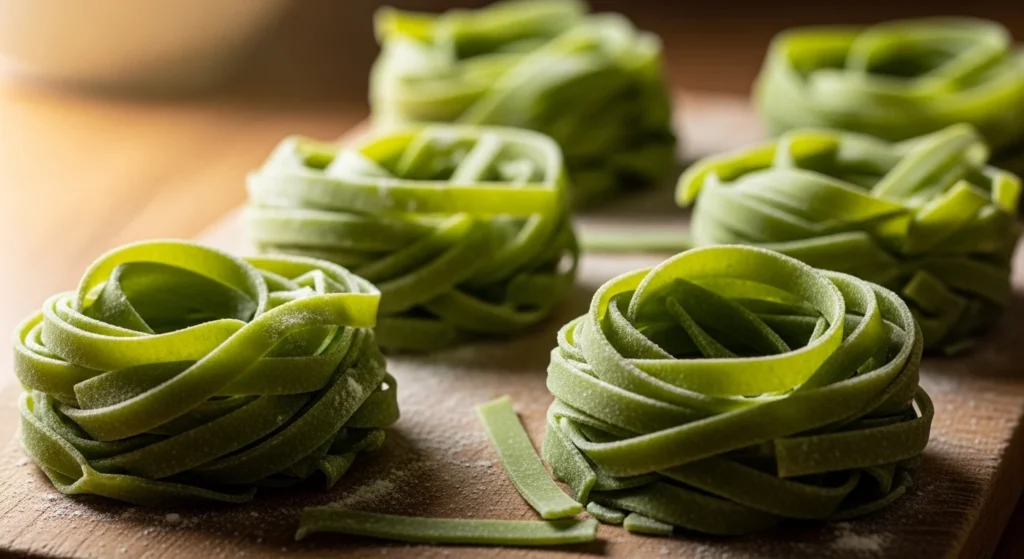
If you’ve ever seen that gorgeous emerald-green pasta at an Italian restaurant and wondered, “Can I actually make that at home?” — the answer is a big yes. Homemade spinach pasta is surprisingly simple, incredibly fresh-tasting, and visually stunning on the plate.
The secret isn’t fancy equipment. It’s technique: blanching the spinach for vibrant color, squeezing it bone-dry, and building a silky dough that rolls into delicate ribbons of pasta perfection.
Ready to make pasta that looks impressive but feels totally doable? Let’s dive in.
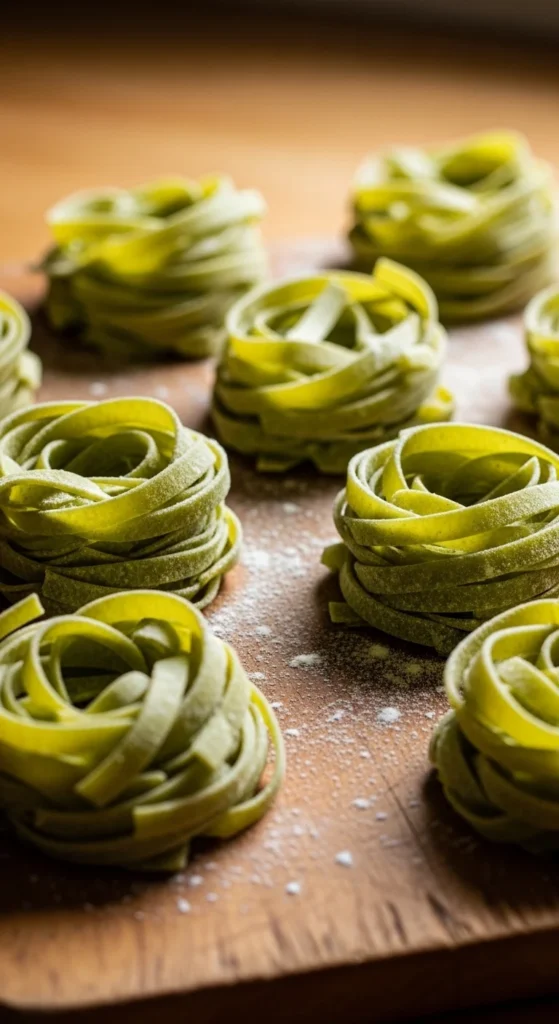
Why Spinach Pasta Is So Special
Spinach pasta isn’t just about color — it’s about texture and freshness.
When done right, you get:
- 🌿 Vibrant natural green color
- 🍝 Tender yet slightly chewy bite
- ✨ Light flavor that pairs with simple sauces
- 🏡 Restaurant-quality results at home
Unlike heavy cream pastas, spinach pasta shines best with butter, olive oil, or lemon-based sauces that let the noodles take center stage.
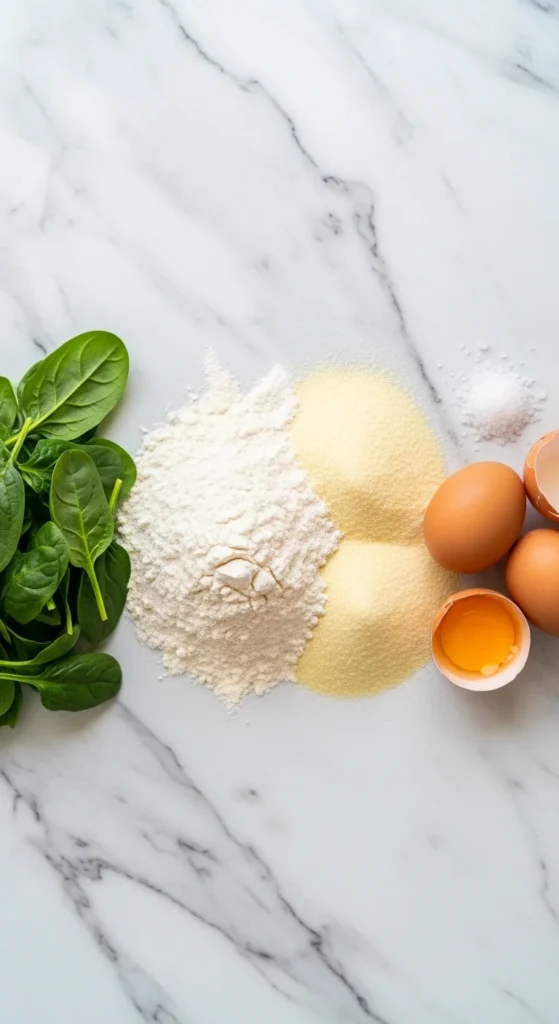
Ingredients You’ll Need
Keep the ingredient list short and high quality.
For the dough:
- 3 cups baby spinach (packed)
- 2 large eggs
- 2 cups 00 flour
- 1 cup semolina flour
- ½ tsp salt
Why this flour combo works:
- 00 flour → silky, tender texture
- Semolina → light chew and structure
💡 The common sweet spot is about a 2:1 ratio of 00 to semolina.
Step 1: Blanch the Spinach (Color Lock Method)
This is the step that separates dull green pasta from vibrant, eye-catching noodles.
How to blanch properly:
- Bring a pot of salted water to a boil
- Add spinach for 30 seconds only
- Immediately transfer to an ice bath
- Drain well
✅ This process preserves that beautiful bright green.
Why it matters:
- Stops enzyme browning
- Locks in color
- Softens leaves for smoother puree
Step 2: Squeeze Spinach Extremely Dry
This step is non-negotiable. Excess water = sticky dough.
Use the wringer technique:
- Place cooled spinach in a clean kitchen towel
- Twist and squeeze firmly
- Keep squeezing until almost no liquid comes out
You should end up with a tight, compact spinach ball.
💡 Properly squeezed spinach is the #1 fix for sticky pasta dough.
Step 3: Puree the Spinach and Eggs
Smooth puree = smooth dough.
Do this:
- Add squeezed spinach to a blender or food processor
- Add eggs
- Blend until completely smooth and creamy
You shouldn’t see leafy bits — the mixture should look like green paint.
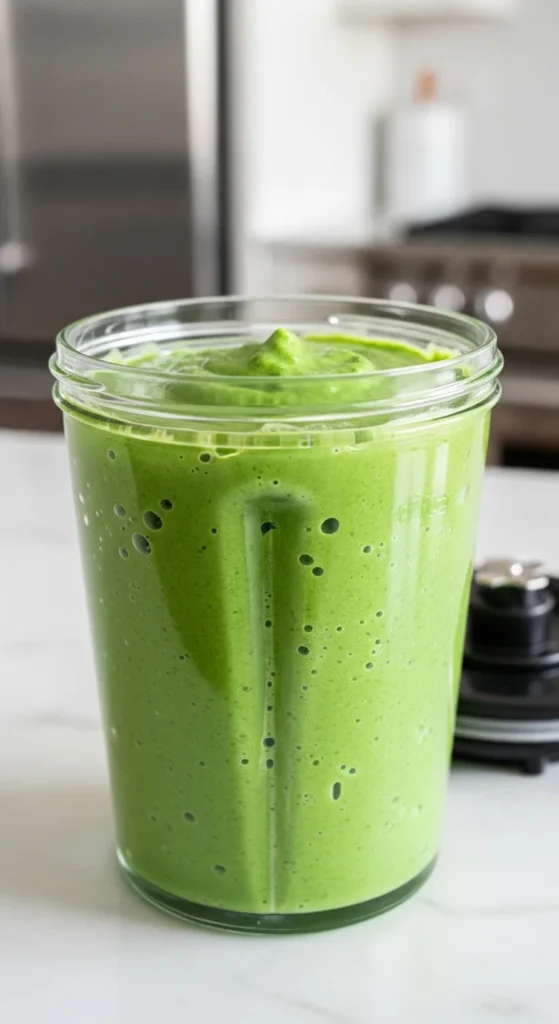
Blender vs. food processor
- Blender → smoothest color
- Food processor → slightly more rustic
Both work — smooth is just prettier.
Step 4: Form and Knead the Dough
Now the pasta magic begins.
The well method (classic approach):
- Mix 00 flour + semolina + salt on your work surface
- Create a well in the center
- Pour in spinach-egg mixture
- Gradually incorporate flour with a fork
- Knead 8–10 minutes until smooth
What the dough should feel like:
- Smooth and elastic
- Slightly firm
- Not sticky
Fixes if needed
- Sticky → dust with more flour
- Too dry → wet hands and knead
Step 5: Rest the Dough (Don’t Skip!)
Resting relaxes the gluten so the pasta rolls thin without snapping.
Resting timeline:
- Wrap dough tightly in plastic
- Let rest 30–60 minutes at room temperature
🧠 This step dramatically improves texture.
Optional pro move:
Refrigerate up to 24 hours for deeper flavor.
Step 6: Roll the Pasta Thin
Time to transform dough into beautiful sheets.
Using a pasta machine:
- Divide dough into 4 pieces
- Flatten one piece slightly
- Run through widest setting
- Fold and repeat twice
- Gradually roll thinner to level 4–6
That’s the sweet spot for fettuccine or tagliatelle.
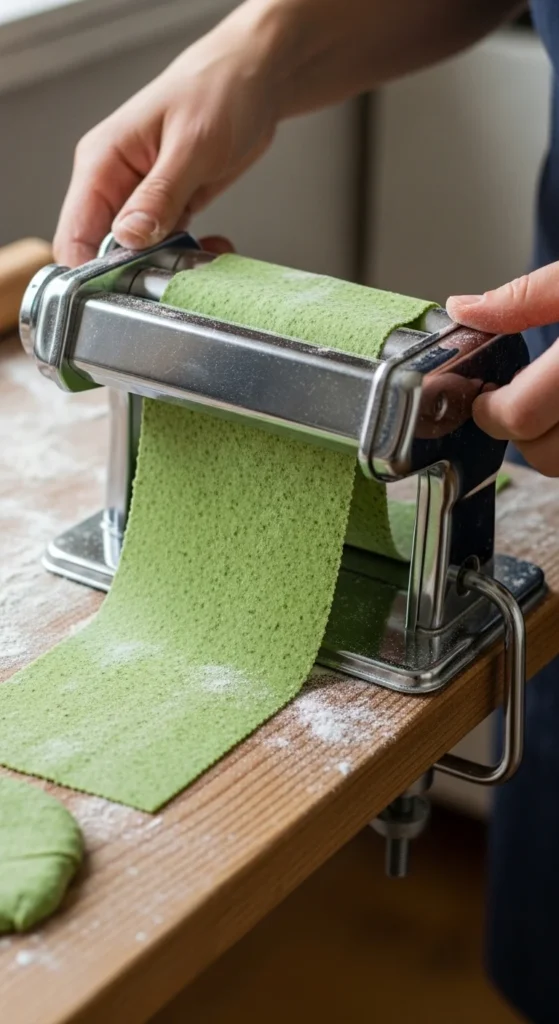
No machine?
You can use a rolling pin — just aim for very thin sheets.
Step 7: Cut and Cook the Fresh Pasta
Once rolled, cutting and cooking happens fast.
To cut:
- Use fettuccine or tagliatelle cutter
- Or roll sheet and slice by hand
To cook fresh spinach pasta:
- Boil salted water
- Cook 45–90 seconds only
- Drain immediately
⚡ Fresh pasta cooks MUCH faster than dried.
Signs it’s done:
- Floats to surface
- Tender but still al dente
Best Light Sauces for Spinach Pasta
Heavy sauces can overwhelm delicate spinach noodles. Keep it light and glossy.
Top pairings:
- Butter + Parmesan
- Olive oil + garlic
- Lemon butter sauce
- Light cream with peas
- Brown butter and walnuts
💡 Rule of thumb: If the sauce is heavy, the pasta gets soggy.
Common Spinach Pasta Mistakes
Avoid these and you’ll get perfect results every time.
Pasta looks dull green
- Fix: Always blanch + ice bath
Dough is sticky
- Fix: Squeeze spinach more thoroughly
Pasta sheets tear
- Fix: Rest dough longer
Texture is tough
- Fix: Roll thinner (level 4–6)
Pasta tastes watery
- Fix: Remove more moisture from spinach
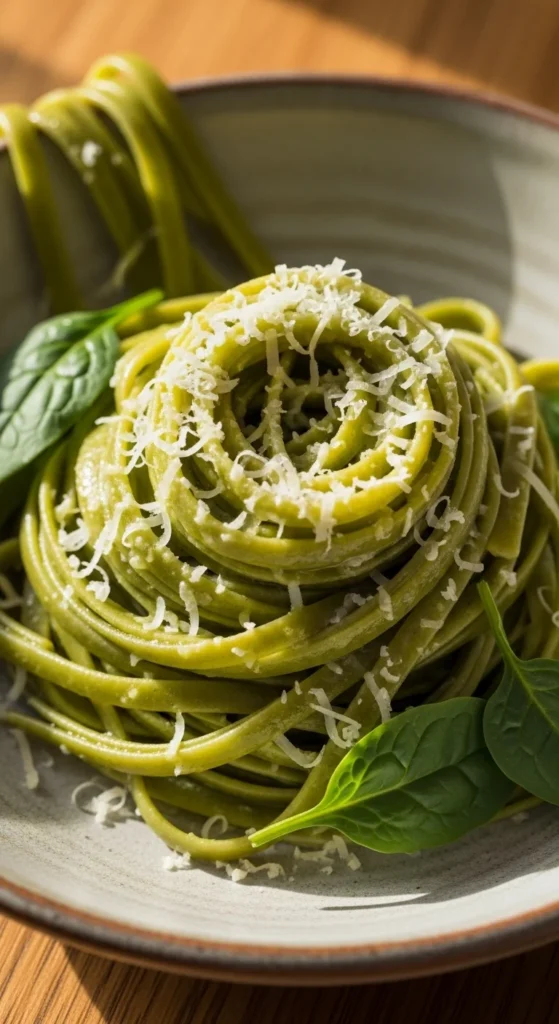
Serve and Enjoy
Once tossed with your favorite light sauce, plate immediately while hot and glossy. Finish with:
- Fresh cracked pepper
- Extra grated Parmesan
- Drizzle of olive oil
- Few basil or spinach leaves
Final Takeaway
Homemade spinach pasta looks fancy, but it’s really about mastering a few simple techniques: blanch for color, squeeze for texture, rest for elasticity, and keep sauces light. Once you try it, boxed pasta just won’t hit the same.
✨ Save this recipe for later and impress everyone at your next pasta night!