There’s something wildly satisfying about turning just flour and eggs into silky ribbons of fresh pasta. No boxes. No preservatives. Just your hands, a countertop, and dough that transforms into something restaurant-level delicious.
The first time you roll out fresh pasta, it feels like magic. The texture is softer. The flavor is richer. And the sauce clings like it was meant to be there.
Best part? It’s way easier than you think.
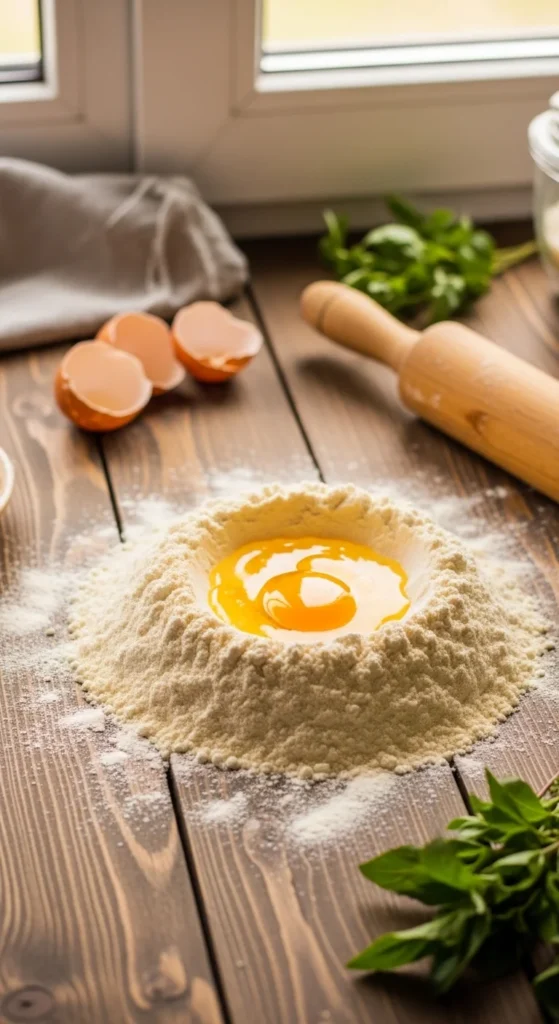
Let’s walk through the simple, step-by-step method that Italian nonnas have used forever — beginner-friendly and foolproof.
Step 1: Gather Your Ingredients (Simple Is Best)
Fresh pasta doesn’t need fancy ingredients. In fact, fewer is better.
Classic Egg Pasta Dough:
- 2 cups (about 200g) flour per 2 eggs
- Pinch of salt
- Semolina or rice flour for dusting
Flour options:
- Tipo 00 flour → silky smooth, authentic texture
- All-purpose → totally fine for beginners
- Semolina blend → slightly chewy bite
Golden ratio to remember:
👉 100g flour : 1 egg
It scales perfectly every time.
Step 2: Make the Traditional Flour Well
This is the iconic “Nonna method” — and it works beautifully.
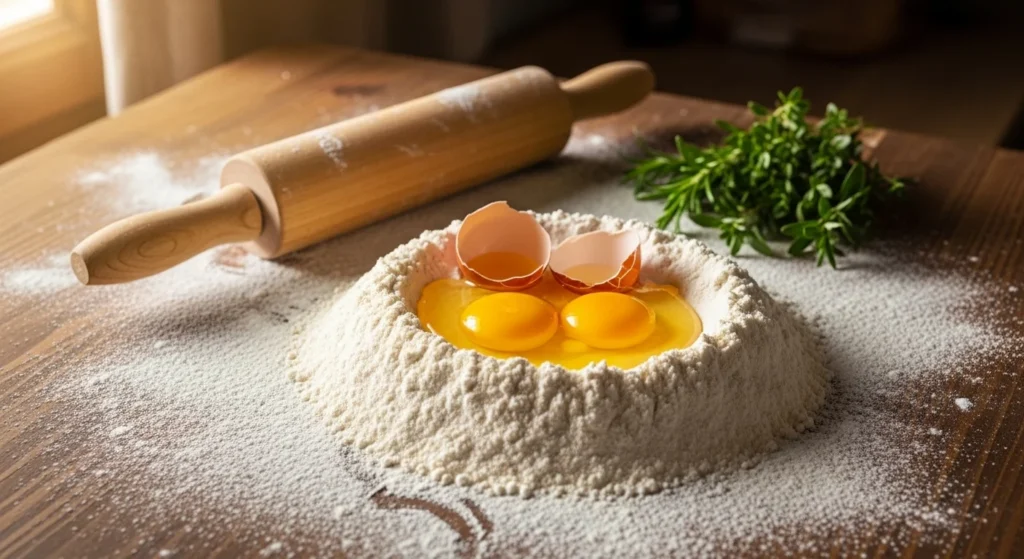
Pour your flour onto the counter and shape it into a mound. Then make a crater in the middle like a volcano.
Crack the eggs into the center.
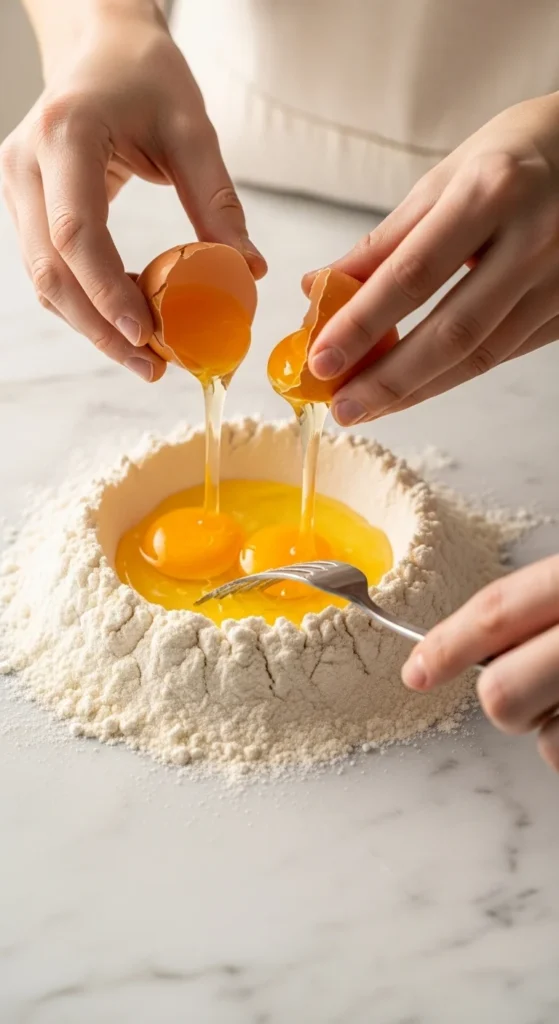
Use a fork to:
- Beat the eggs slowly
- Gradually pull flour from the sides
- Keep mixing until it becomes shaggy and thick
Don’t rush. Slow incorporation prevents a sticky mess.
When it looks rough and crumbly, use your hands to bring it together.
Step 3: Knead Until Silky Smooth
Now comes the secret to great pasta: kneading.
This develops gluten, which gives pasta that perfect chewy bite.
How to knead:
- Push dough away with your palm
- Fold back
- Rotate
- Repeat
Do this for 8–10 minutes.
At first, it feels rough. Then suddenly — magic — it turns smooth and elastic.
How do you know it’s ready?
Try the windowpane test:
Stretch a small piece. If light passes through without tearing, you’re good.
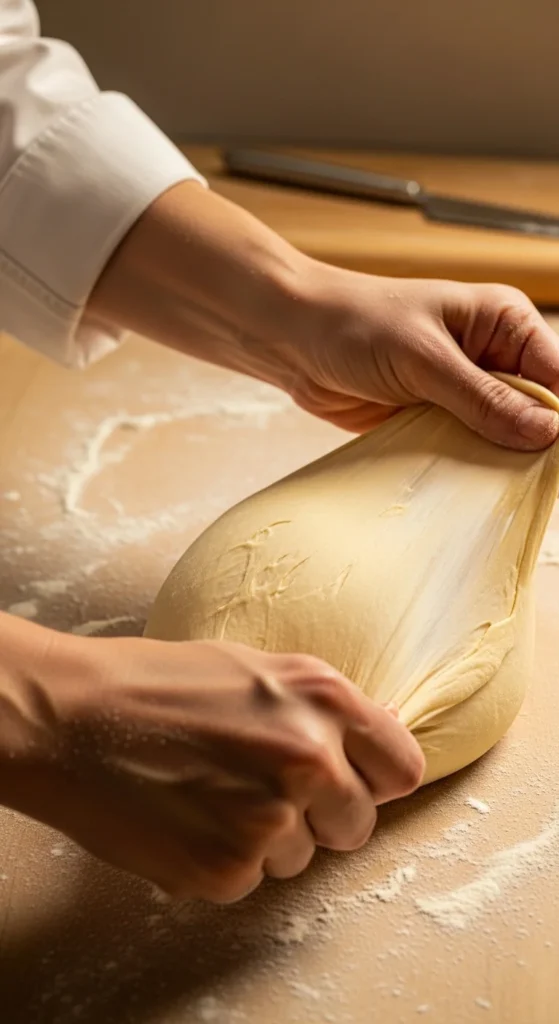
If dough feels:
- Too dry → add tiny drops of water
- Too sticky → dust with flour
Aim for soft, smooth, not tacky.
Step 4: Let It Rest (Don’t Skip This!)
This step changes everything.
Wrap the dough tightly and let it rest 30–60 minutes at room temperature.
Why?
Resting:
- Hydrates the flour
- Relaxes gluten
- Makes rolling easier
- Prevents tough pasta
If you skip resting, rolling becomes a workout. Trust me — rest is worth it.
Use this time to prep sauces or fillings.
Step 5: Roll It Thin (Machine or Hand)
After resting, the dough should feel silky and flexible.
Cut it into 4–6 smaller pieces. Smaller portions are easier to manage.
Using a pasta machine (easiest):
- Start on widest setting
- Feed dough through
- Fold in half
- Repeat
- Gradually move thinner (#5–7 works great)
No machine?
Use a rolling pin and roll until almost see-through.
Lightly dust with semolina to prevent sticking.
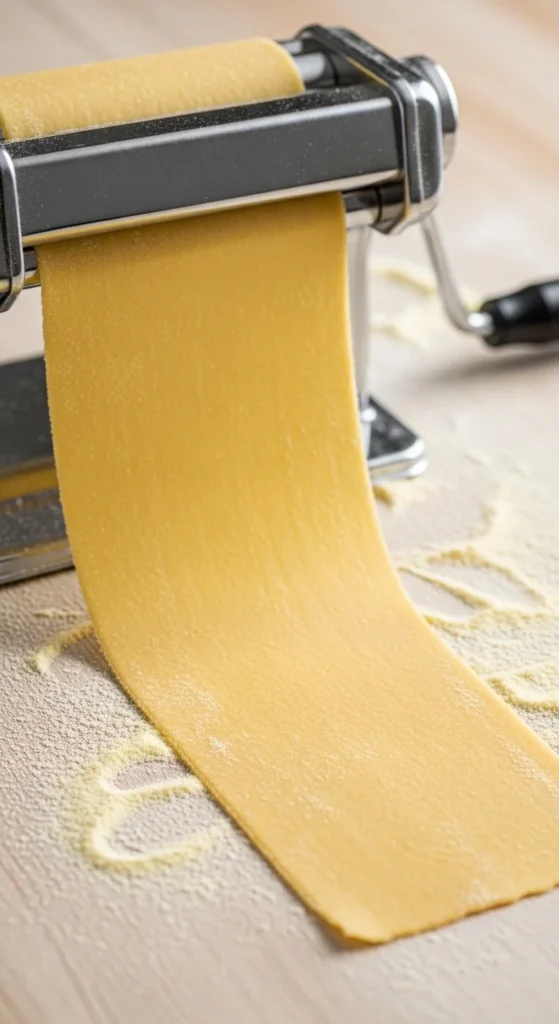
You want sheets thin enough to see your hand through.
Step 6: Shape Your Pasta
Now the fun part!
Beginner-friendly shapes:
- Tagliatelle → wide ribbons
- Fettuccine → medium strips
- Pappardelle → rustic thick cuts
Just roll the sheet loosely and slice with a knife.
Feeling fancy?
Try:
- Ravioli
- Lasagna sheets
- Orecchiette
- Farfalle
Dust pieces lightly and let them dry 10–15 minutes so they hold shape.
Step 7: Cook Fresh Pasta (It’s Fast!)
Fresh pasta cooks way faster than dried.
Seriously fast.
Boiling tips:
- Large pot of salted water
- Drop pasta in
- Cook only 2–4 minutes
- Taste early
When it floats and feels tender with a slight bite, it’s done.
Finish cooking directly in your sauce with a splash of pasta water for that glossy, clingy texture.
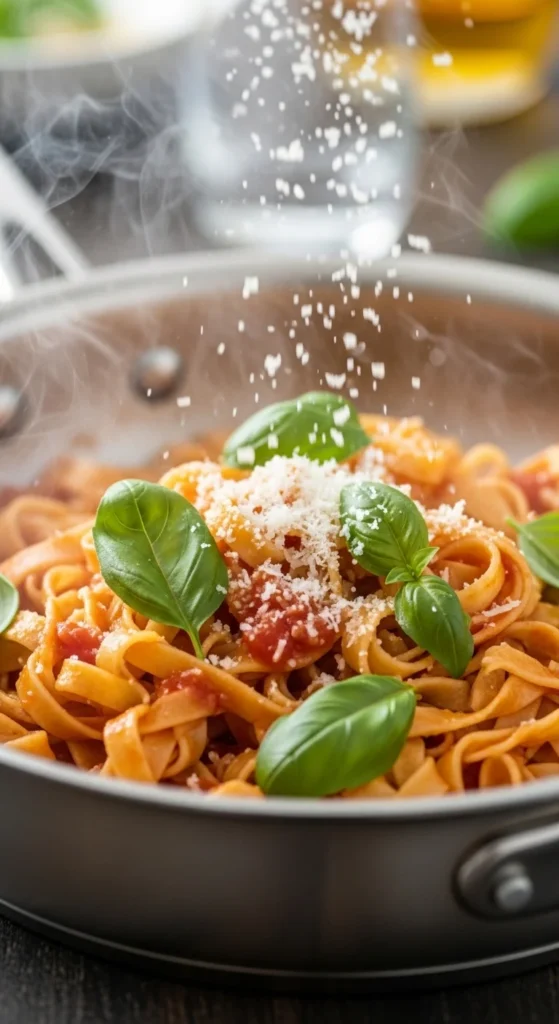
The difference? Softer, richer, melt-in-your-mouth pasta that tastes homemade (because it is).
Bonus Tips for Perfect Results
Quick wins that make a big difference:
- Use room-temp eggs
- Dust with semolina, not flour (less sticky)
- Don’t over-knead (can toughen dough)
- Freeze extra sheets for later
- Add herbs or spinach for fun colored dough
Final Thoughts
Making fresh pasta from scratch feels impressive — but it’s really just flour, eggs, and a little patience.
Once you try it, boxed pasta just doesn’t compare.
Soft. Silky. Saucy. Totally worth it.
Save this guide, grab some flour, and turn tonight into homemade pasta night. 🍝