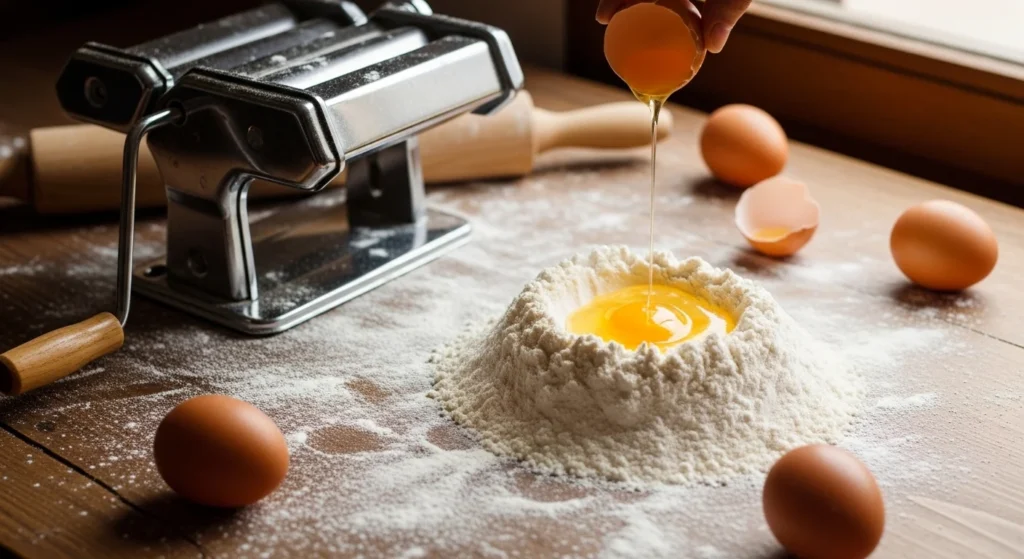
There’s fresh pasta… and then there’s homemade fettuccine — silky ribbons that cook in minutes, soak up sauce like a dream, and taste ten times better than anything from a box. Once you try it, store-bought just doesn’t hit the same.
And the best part? It’s only flour and eggs.
Seriously.
A little kneading, a quick rest, and suddenly you’re cutting beautiful, wide noodles like an Italian nonna.
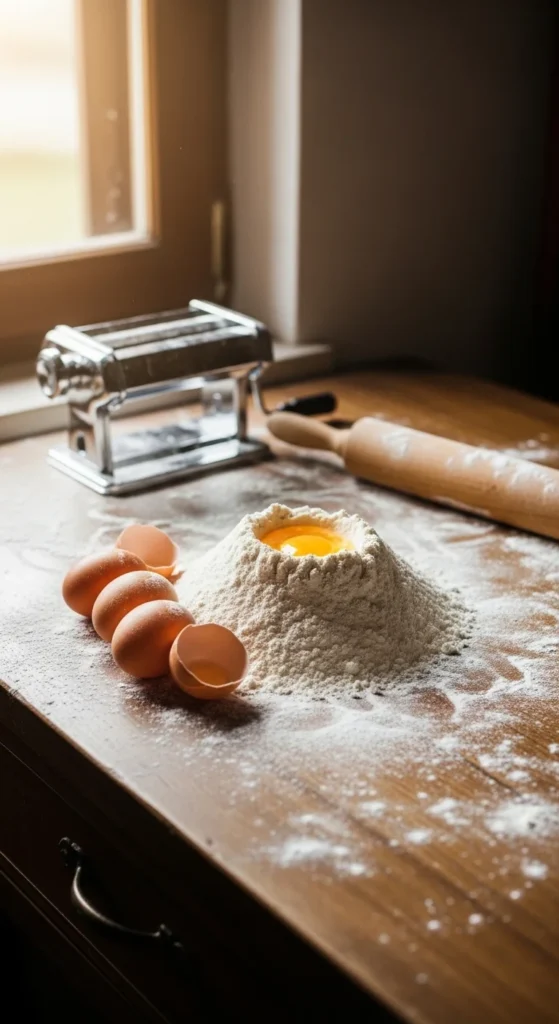
Let’s walk through the step-by-step method that gives you tender, restaurant-quality fettuccine every time — even if it’s your first try.
Step 1: Start with Simple Ingredients
Classic fettuccine dough is beautifully minimal.
You only need:
- 2 cups (about 250g) 00 or all-purpose flour
- 4 large eggs
- Pinch of salt
- Semolina or rice flour for dusting
- Optional: 1 tbsp olive oil (extra tenderness)
That’s it.
Easy ratio to remember:
👉 100g flour : 1 egg
This scales perfectly whether you’re cooking for two or a crowd.
Room-temperature eggs and flour mix more smoothly, so pull them out 20–30 minutes early.
Step 2: Make the Classic Flour Well
This old-school method looks fancy but is actually easier than using a bowl.
Pour flour directly onto your counter. Form a mound. Then make a deep crater in the center.
Crack eggs into the well.
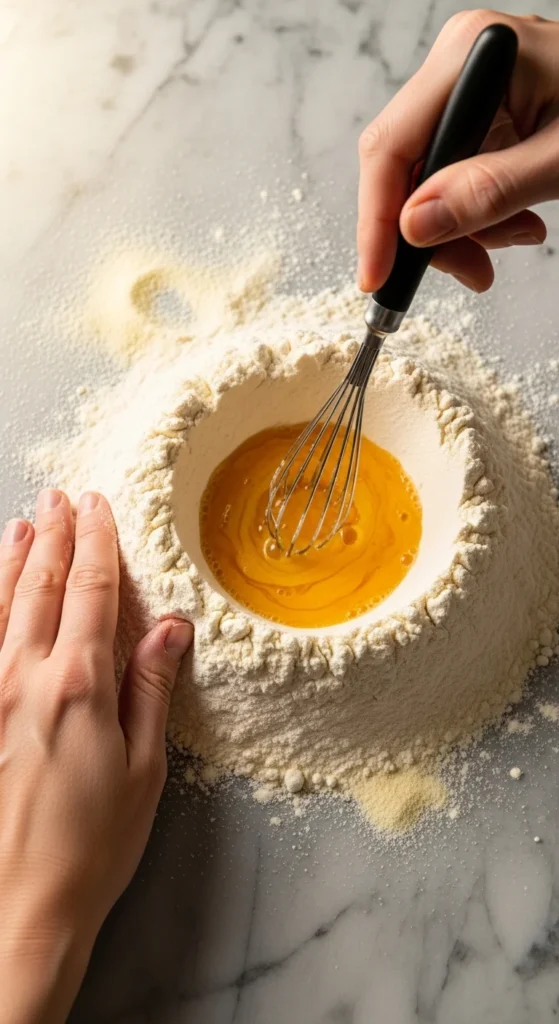
Using a fork:
- Beat eggs gently
- Slowly pull flour inward
- Keep mixing until thick and shaggy
Once it gets messy, switch to your hands and bring it together into a rough ball.
Don’t worry if it looks imperfect — that’s normal.
Step 3: Knead Until Silky Smooth
This is where the magic happens.
Kneading develops gluten, which gives fettuccine its signature chewy, silky texture.
How to knead:
- Push dough away with your palm
- Fold back
- Rotate
- Repeat
Do this for 8–10 minutes.
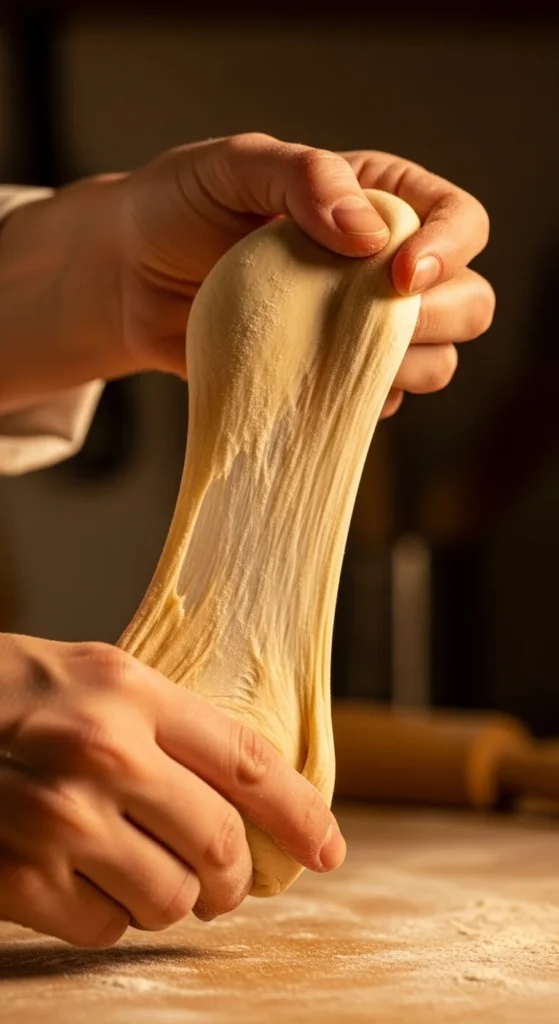
At first it feels sticky and rough. Keep going. Suddenly it transforms into smooth, elastic dough.
Quick doneness test:
Stretch a small piece. If it forms a thin “window” without tearing, you’re ready.
If it feels:
- Sticky → add tiny flour dusting
- Dry/crumbly → add drops of water
You want soft and silky, not tacky.
Step 4: Let It Rest (Game-Changer Step)
Wrap the dough tightly in plastic or cover with a bowl.
Let it rest 30 minutes.
This step:
- Relaxes gluten
- Makes rolling easier
- Prevents tough pasta
- Creates smoother sheets
Skipping rest = stiff dough that fights you. Resting = dreamy rolling.
Use this time to prep your sauce.
Step 5: Roll It Thin with a Pasta Machine
After resting, cut the dough into 4–6 pieces. Smaller portions are easier to handle.
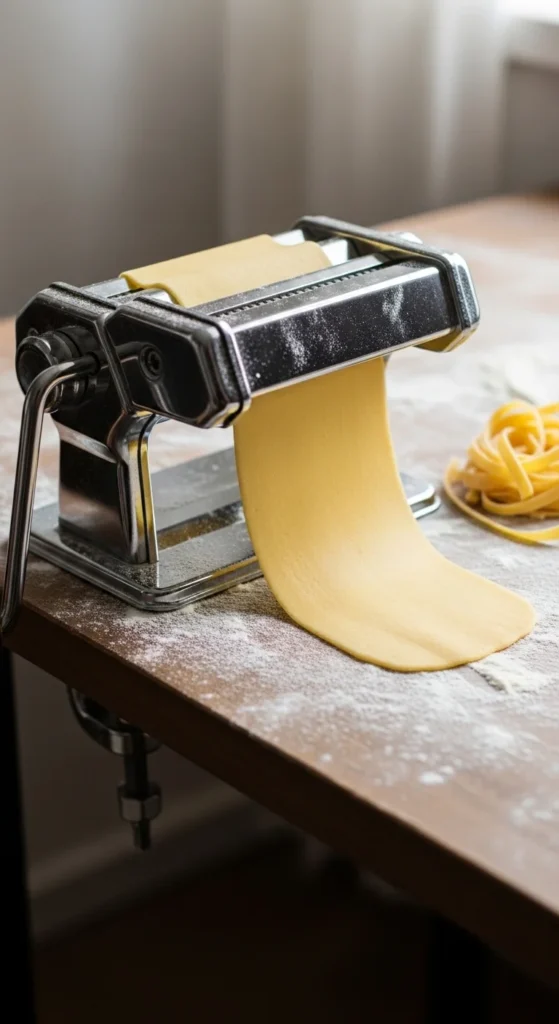
Flatten one piece slightly and feed it through the widest pasta machine setting.
Rolling technique:
- Run through widest setting
- Fold in half
- Repeat 2–3 times
- Gradually move thinner
Aim for setting #5–7 for fettuccine — thin but not paper-thin.
Dust lightly with semolina to prevent sticking.
No machine? No problem. Use a rolling pin and roll until almost see-through.
Step 6: Cut Into Fettuccine Ribbons
Now the fun part.
Attach the fettuccine cutter or hand-cut strips about ¼-inch wide.
You’ll get beautiful, long ribbons.
Lightly toss with semolina and form into loose nests.
Why nests?
- Prevent sticking
- Easy storage
- Looks super Pinterest-worthy
Let them dry 10–15 minutes before cooking.
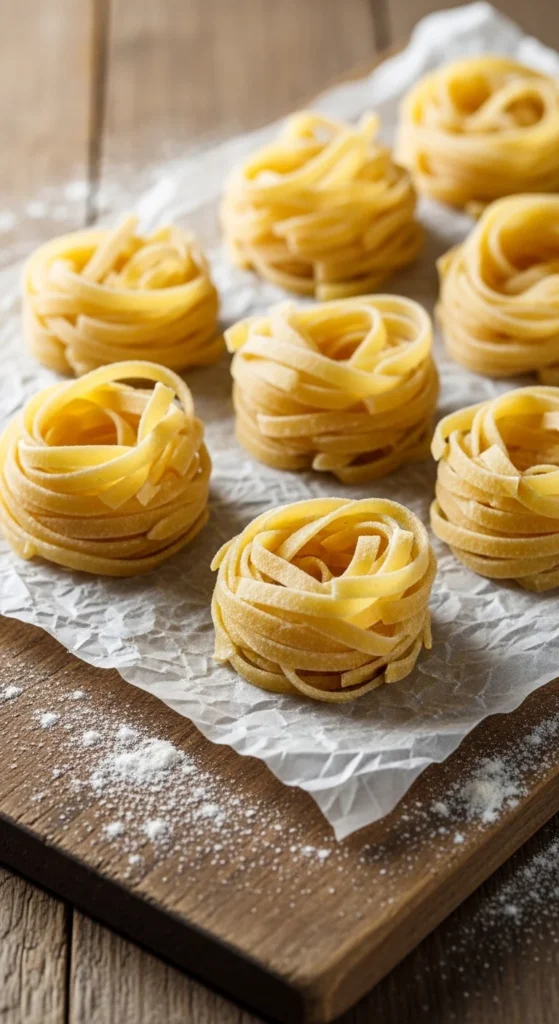
You can also freeze these nests for later — straight from freezer to boiling water.
Step 7: Cook Fresh Fettuccine (It’s FAST!)
Fresh pasta cooks way faster than dried.
Boil a large pot of heavily salted water.
Drop in the noodles and stir immediately.
Cook only 3–4 minutes until al dente.
Before draining, save:
👉 1 cup pasta water
This starchy water helps sauces emulsify and cling perfectly.
Step 8: Pair with the Perfect Sauce
Fettuccine shines with rich, simple sauces.
Classic choices:
- Butter + Parmigiano Reggiano (authentic Alfredo, no cream!)
- Creamy Alfredo
- Meaty ragù
- Brown butter + sage
For true Roman-style Alfredo:
- Melt butter
- Toss pasta off heat
- Add cheese
- Splash pasta water
- Stir until silky
The starch creates a glossy, creamy sauce without cream.

Pro Tips for Foolproof Pasta
✔ Dust with semolina, not flour
✔ Stir first 2–3 minutes while boiling
✔ Don’t overcook (fresh pasta turns mushy fast)
✔ Re-roll scraps once only
✔ Warm plates so sauce sticks better
Tiny details make a big difference.
Final Thoughts
Homemade fettuccine feels fancy — but it’s just flour, eggs, and a little love. Once you try it, you’ll realize fresh pasta nights are easier than takeout.
Soft. Silky. Sauce-clinging perfection.
Save this recipe for later and turn your kitchen into a tiny Italian trattoria tonight. 🍝