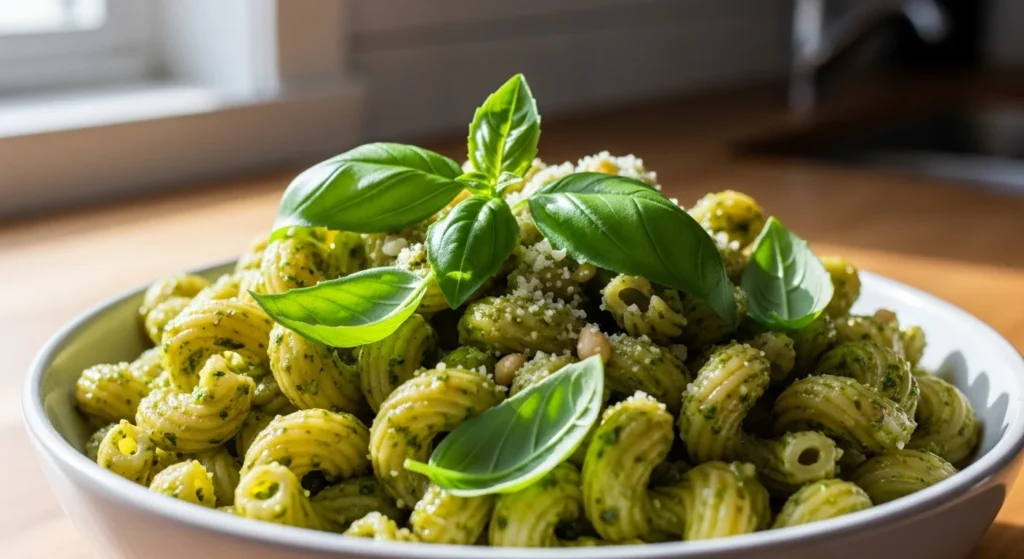
Bright green, intensely fragrant, and irresistibly fresh — real pesto pasta is one of the quickest ways to bring authentic Italian flavor to your table. When made the traditional Genovese way, pesto isn’t cooked at all. Instead, fresh basil, pine nuts, cheese, and olive oil are gently crushed into a vibrant sauce that clings beautifully to hot pasta.
The best part? You can go from basil leaves to a silky bowl of pasta in about the time it takes to boil water.
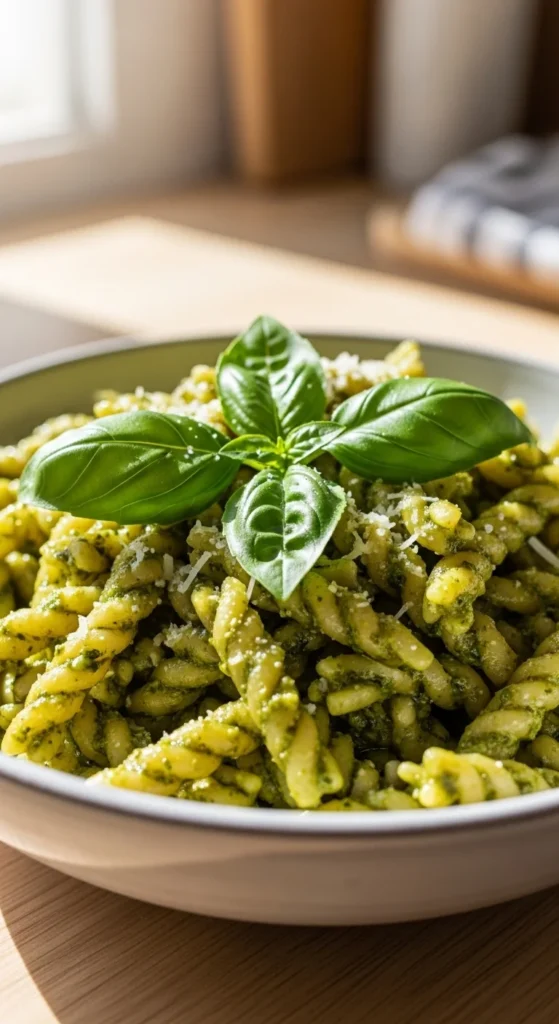
What Makes Authentic Pesto Genovese Special
True Pesto alla Genovese is all about freshness and gentle handling.
Authentic characteristics:
- Made raw — never heated
- Uses fresh basil leaves only
- Traditionally crushed with mortar and pestle
- Balanced Pecorino–Parmesan cheese blend
- Emulsified with extra virgin olive oil
- Tossed with starchy pasta water
The classic Genovese trio
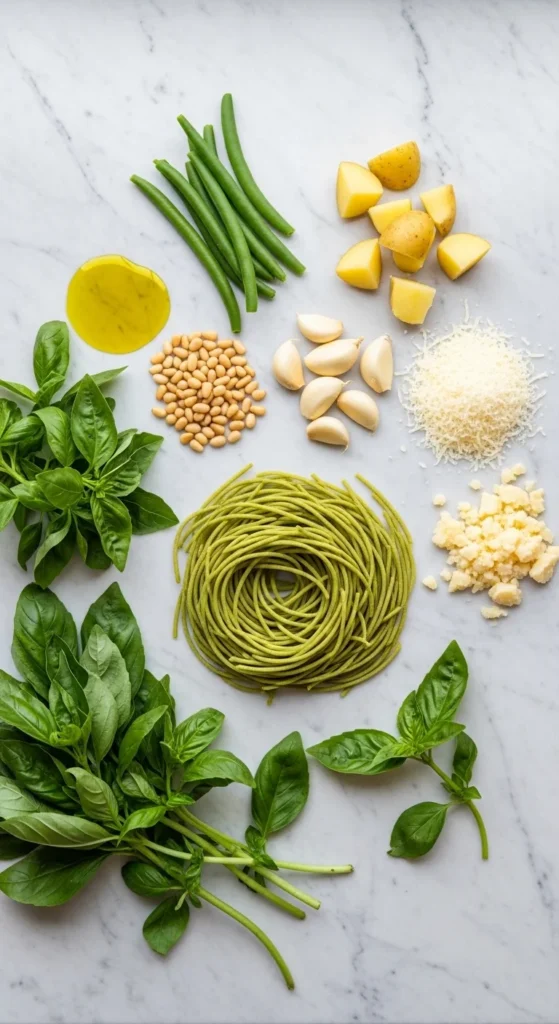
Traditional Ligurian pesto pasta often includes:
- Trofie pasta
- Cubed potatoes
- Green beans
This combo turns a simple pasta into a hearty, traditional dish.
Ingredients You’ll Need
This recipe serves about 4 people.
For the pesto
- 50 g fresh basil leaves (stems removed)
- 30 g pine nuts (lightly toasted)
- 1 small garlic clove (sprout removed)
- 40 g Pecorino Romano
- 20 g Parmesan
- 120 ml extra virgin olive oil
- Coarse sea salt
For the pasta
- 360 g trofie (or spaghetti)
- 1 medium potato, peeled and cubed
- 150 g green beans, trimmed
Step 1: Prep the Basil Properly
This step makes a huge difference in color and flavor.
Basil prep rules
- Use leaves only, no stems
- Gently wipe clean (avoid soaking)
- Keep leaves dry and cool
- Use immediately after picking
⚠️ Why not wash heavily? Excess water speeds oxidation and can turn pesto dark.
If needed, rinse quickly and dry thoroughly with paper towels.
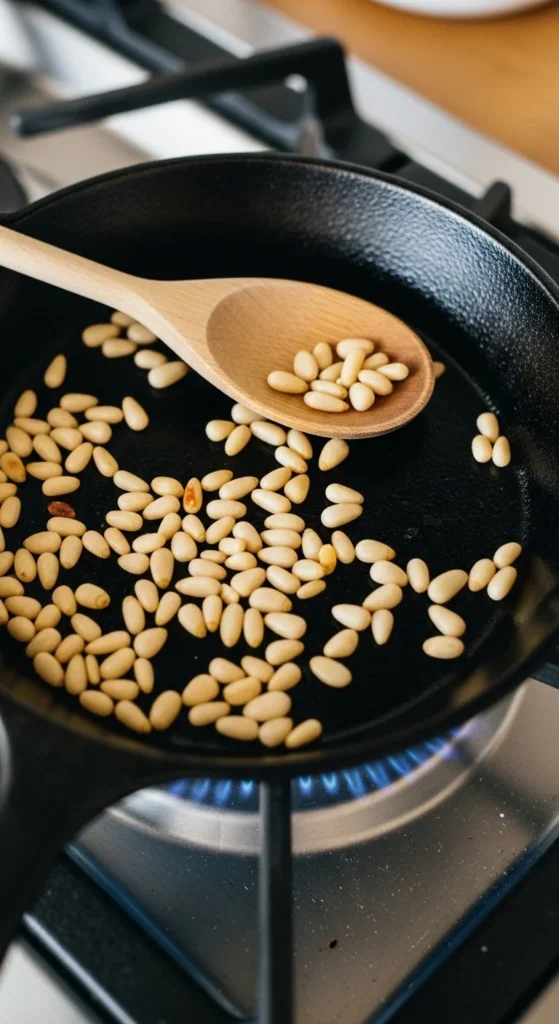
Step 2: Lightly Toast the Pine Nuts
Toasting adds depth — but keep it gentle.
How to toast:
- Use a dry skillet
- Medium-low heat
- Stir constantly
- Cook 2–3 minutes until lightly golden
You want fragrant, not browned. Burnt pine nuts will make pesto bitter.
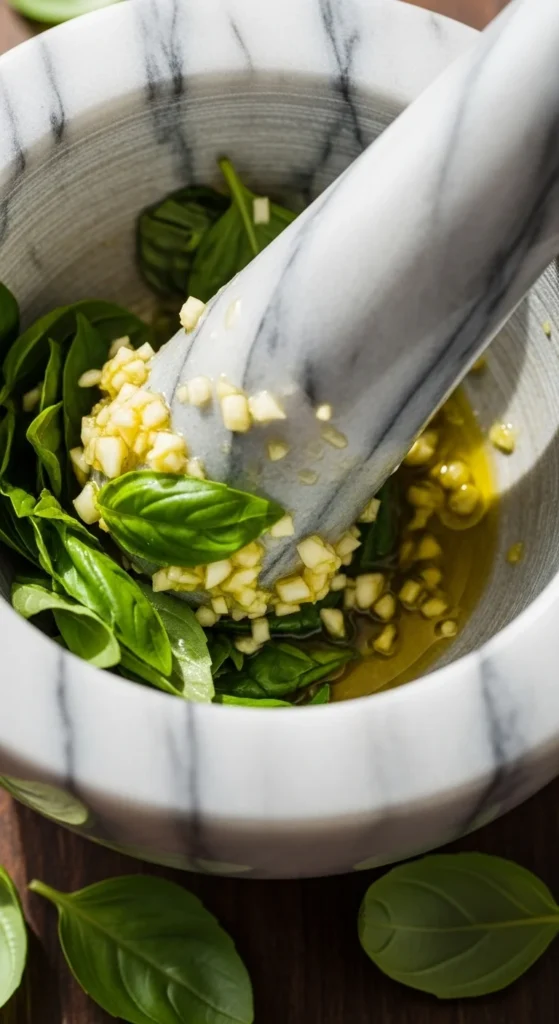
Step 3: Crush the Pesto (Traditional Method)
The mortar-and-pestle method is key to authentic texture and color.
Step-by-step
- Add garlic and coarse salt to the mortar.
- Crush into a smooth paste.
- Add basil leaves gradually, grinding gently.
- Stir in toasted pine nuts and crush.
- Mix in grated cheeses.
- Slowly drizzle in olive oil while stirring.
Why mortar and pestle works best
- Prevents heat buildup
- Preserves bright green color
- Releases basil oils gently
- Creates authentic texture
Shortcut: A food processor works — but pulse gently and avoid overheating.
Step 4: Cook Pasta with Potatoes and Green Beans
This is the traditional Ligurian technique.
Bring a large pot of salted water to boil.
Add in stages
- Add cubed potatoes first — cook 5 minutes
- Add green beans — cook 3 minutes
- Add pasta — cook until al dente
Everything finishes together in one pot — efficient and authentic.
Why this matters
- Potatoes add creaminess
- Beans add freshness
- Starchy water becomes extra flavorful
Before draining, reserve at least 1 cup pasta water.
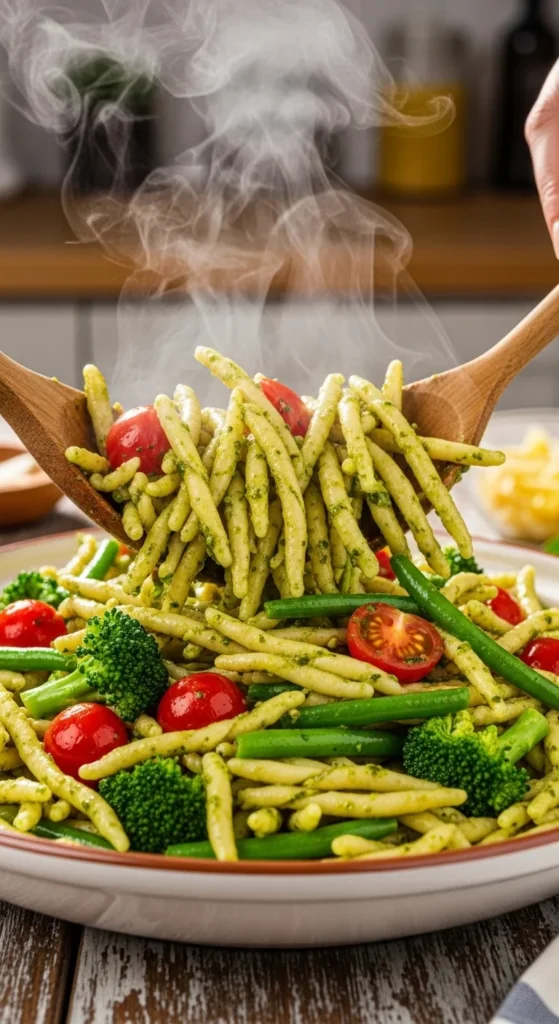
Step 5: Toss Pesto with Hot Pasta (No Heat!)
This is where the magic happens.
Important: Never cook pesto in a hot pan.
How to combine properly
- Add drained pasta, potatoes, and beans to a large bowl.
- Spoon pesto over the top.
- Add splashes of warm pasta water.
- Toss gently until silky and coated.
What you’re looking for
- Loose, glossy coating
- Not thick or pasty
- Bright green color
- Even distribution
If too thick → add pasta water.
If too thin → add more cheese.
Optional Flavor Twists
Want to customize your pesto?
Classic upgrades
- Add squeeze of lemon juice (modern touch)
- Use half walnuts or pistachios instead of pine nuts
- Blend Pecorino-Parmesan differently
Allergy-friendly swaps
- Sunflower seeds instead of pine nuts
- Almonds for budget option
- Manchego for a unique cheese twist
Just remember: the more you change, the less traditional it becomes.
Storage and Freezing Tips
Fresh pesto keeps well if handled properly.
Refrigerator
- Store in airtight container
- Cover surface with thin olive oil layer
- Use within 3 days
Freezer (best method)
- Spoon into ice cube trays
- Freeze solid
- Transfer to freezer bags
Perfect for quick pasta nights.
Common Pesto Mistakes to Avoid
❌ Overheating in blender
❌ Using wet basil
❌ Adding too much garlic
❌ Skipping pasta water
❌ Cooking pesto in a pan
Remember: pesto should taste fresh, bright, and herb-forward — never dull or greasy.
Final Thoughts
Fresh pesto pasta proves that simple ingredients, handled gently, can create something extraordinary. With fragrant basil, good olive oil, and properly cooked pasta, you can have an authentic Ligurian classic on the table in minutes.
Make a batch, freeze the extras, and keep a taste of Italy ready anytime.
Save this recipe for later and enjoy your fresh green masterpiece! 🌿🍝